
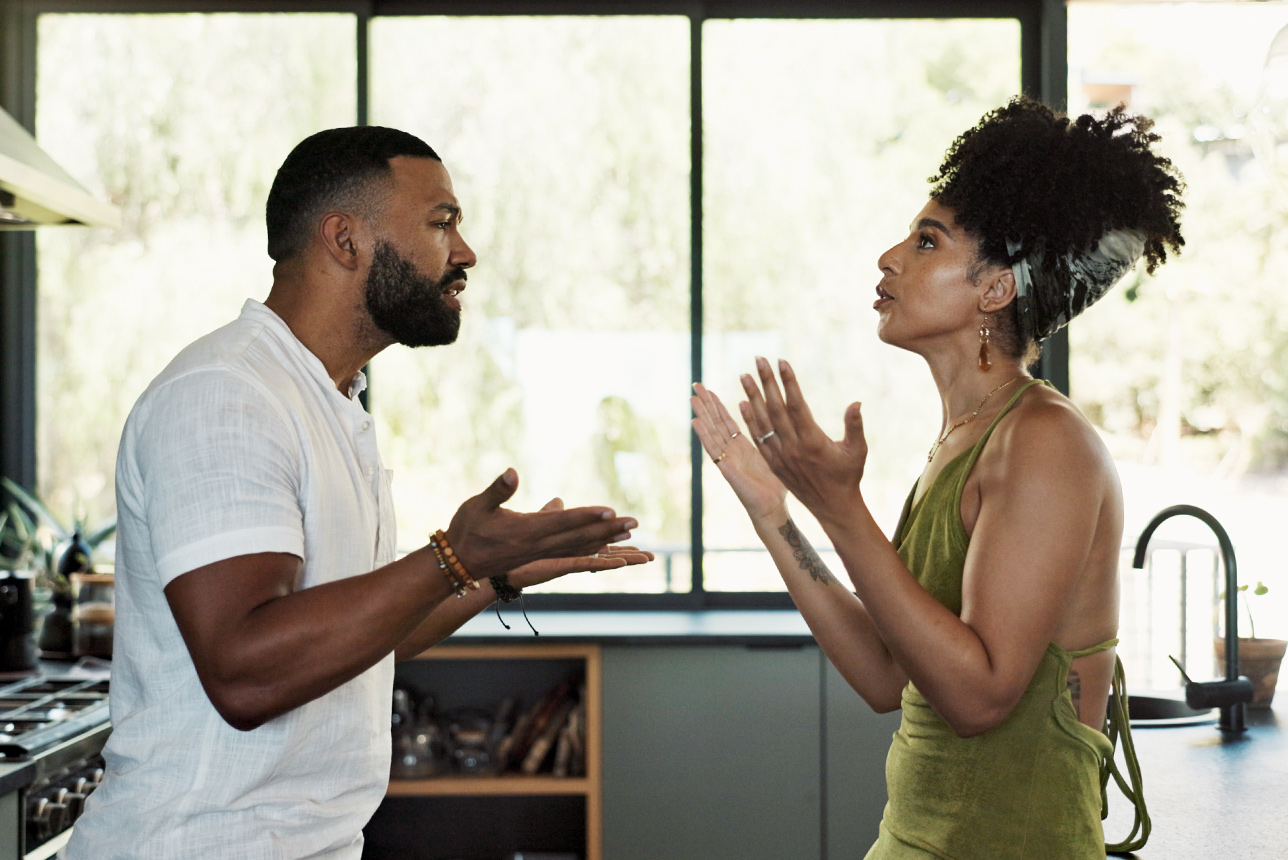
Couples fight. It’s okay.
It’s an unfortunate side effect of romance, and one that your favorite shows and movies love to glorify. What cinema fails to capture is the rough and rocky road to reparations and reconnection.
Emphasis on reconnection here. Love is built on the simple principle of connection, and fights can quickly sever this. Reconnecting after a destructive fight can often feel like dealing with radioactive waste. It’s necessary, but certainly riddled with unseen dangers.
Got Space?
While it may seem contradictory to create even more space following a fight, it’s completely futile to do any repairs while your nervous system is completely fried. Would you want a surgeon operating on you with unsteady hands? Reconnecting with your partner requires the same mental focus and clarity as a complicated surgery, and rushing into solutions without creating space for emotions to flow is a recipe for disaster.
Following heated conflict, you and your partner need some space. Consider using the following phrases with your partner before you just go ghost and vanish into the woods:
- “I’d like for us to continue this conversation when I’m not feeling this way. Can you give me (specify length of time) to feel what I need to feel before we take this on again?”
- “We deserve to tackle this together when we’re not feeling like this. Can we talk about this again around (specific time)”
- “I want us to have a redo. Here’s what I need: _____, what do you need right now? I think we can talk about this again (agree on specific time)”
It might sound awkward and disjointed to use this sort of verbiage when you were just yelling at the top of your lungs, but also consider how awkward and disjointed it is to reach this boiling point with someone you swear is the love of your life. Note that each phrase leads with a collaborative tone (we, us), acknowledgement of the animosity and necessity for space, and most importantly; a time frame to reconvene. Establishing a time frame to revisit the and unpack the conflict helps set up accountability, a core component of reconnection. Your therapist can work with you to create communications that cater to you and your partner’s way of communicating. Roleplaying is a core practice in therapy, and can be a safe way to explore how these phrases feel to you.
Whose Fault Is It Anyway?
Gotcha. Here’s the thing. It doesn’t even matter.
Even in a partnership, you are responsible for yourself. Your actions. Your words. Your feelings. A common pitfall in addressing conflict with your partner is shifting the focus from what is bothering you, to something they did or didn’t do. Remember those “I” statements you learned in elementary school? Now’s a good time to bring them out. Here’s what shifting the accountability from your partner to yourself looks like:
- You never listen. → I feel unheard.
- You make me feel like I’m not enough. → I’m not being validated or seen in the way I deserve to be.
- You changed. → Our relationship is evolving and I don’t know where we stand.
Or if you’re on the other side of conflict:
- I know I raised my voice, but it’s because I felt like I wasn’t being heard.
- The way I communicated my feelings wasn’t clear and created room for insecurity and invalidation.
- I feel like our relationship is changing and I acted the way I did because I’m scared.
I know, “I” statements are cringe and corny and a little elementary. But you can choose to be cringe and corny temporarily or choose to deepen the wounds in your relationship permanently.
A relationship takes more than one person, and leading with accountability for your faults is a great peace offering. Remember, you’re not excusing or forgetting about their actions, only taking responsibility for yours. If you’re lucky, your partner will reciprocate and you’ll be on your way down reconciliation road. The glaring elephant in the room is that your partner is human, and may not choose to reciprocate accountability. Working with a therapist is a great way to work out the complicated emotions that arise as a result of this possibility.
Reparation Road
Conflicts create wounds. And wounds heal. These are the certainties of human existence. What is uncertain is how much pain we allow wounds to inflict, and the extent of the scarring.
Let’s face it. Reconnecting with your partner after a heated conflict is awkward, embarrassing, and downright weird. But someone has to take the first step. Let go of ego, and remember why you chose this person to go through life with you. And remember that they are choosing you back too, flaws and all. Ego and pride certainly won’t offer you a shoulder to cry on, or offer insights to your challenges, or care for you when you’re ill.
Remember my little surgical metaphor at the beginning of this? Surgeons don’t make incisions with chainsaws, they work with precise, gentle, and purposeful tools dedicated to the task at hand. Your attempts to reconnect should follow suit. If you’re really at a loss for words, just start with what you would want to hear:
- “I know you’re still upset about this and I don’t want you to be. What do we need to do to fix this?”
- “I’m sorry. Even when we disagree, I still love you.”
- “I care about you and I care about this relationship. I want to understand you and work on this.”
How you respond to your partner after this is critical. Listen. Not just with your ears, but with your body language. Listen with the same intensity you would the first time they told you they loved you. Don’t dissect your partner’s words, let them sit, and accept them with the same compassion and understanding you’d expect in return. Therapy is a great space to practice attuning yourself to your emotions, and the emotions of others if this concept is foreign.
We can’t rewind time, but we can control how we move forward. Move with curiosity. Move with compassion. Move with love.